

Metal Detecting for Kids: A Family Guide to Digging Into History
Updated: Aug 20, 2025
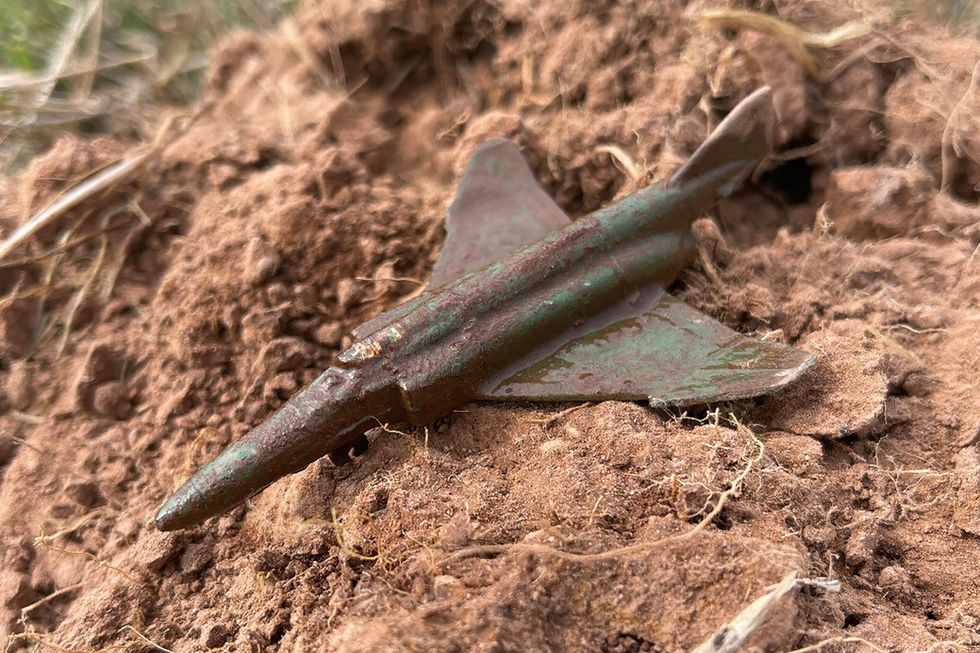
The sight of a child with a metal detector is enough to make most people smile. It promises adventure, the outdoors, and a bit of mystery: what if there’s something fascinating just beneath your feet? In the UK, where every field and footpath carries centuries of history, metal detecting can be a brilliant family activity. Done properly, it teaches curiosity, patience, and respect — for land, the law, and the past. This guide gives parents and carers a clear route into the hobby with children. It keeps jargon to a minimum, explains the terms you’ll actually encounter, and sets out the rules as plainly as possible.
The Non-Negotiable Rule: Permission First, Every Time
Let’s start with the part that matters most. You must have permission to metal detect anywhere in the UK. No exceptions.
That includes beaches, parks, farmland — everywhere. There are different ways permission is granted, but it is always required:
Private land: Ask the landowner (often a farmer) and get the agreement in writing. Without permission you’re trespassing, and keeping what you find could be theft.
Beaches: Many beaches are owned by the Crown Estate. They grant permission by default under their published terms — that is still permission, not a loophole. Always check the conditions and local byelaws.
Public spaces: Parks, commons, nature reserves, and similar areas are owned or managed by councils or other bodies. Each will have its own rules, usually on their website. Some allow detecting, many forbid it.
Blanket bans: Organisations such as the National Trust, Forestry England, and the Ministry of Defence (MOD) do not allow recreational detecting on their land.
Teach children the simple rule: if you don’t have permission, you don’t detect there.
Why Kids Love Detecting (and What They Actually Find)
Children love a good mystery. Every beep from a detector hints at something hidden, and that “treasure hunt” feeling is powerful.
Early finds are usually modest: modern coins, ring pulls, bits of aluminium foil, even the odd toy car.
That’s fine. The UK’s long history means there’s always the chance of older items — Victorian pennies, Georgian buttons, even medieval buckles — but the draw for kids should be the story, not the jackpot.
Choosing a Child-Friendly Detector (Without Overpaying)
Big, complicated machines are a fast track to bored kids. You want light, simple, and sturdy.
Three sensible options are:
Bounty Hunter Junior: Lightweight, basic, works for shallow finds.
Minelab Go-Find series: Compact and foldable; straightforward to use with more capability than toy-level detectors.
Garrett ACE 150: Technically an entry-level adult detector, but light and simple enough for older children.
A quick jargon buster you’ll see in product pages:
Sensitivity: How strongly the detector reacts to targets. Higher sensitivity can pick up smaller or deeper items but may also increase false signals.
Discrimination: The machine’s ability to ignore certain metals (like iron) so you dig less junk. For kids, keep discrimination simple to start with.
Target ID: A number on the screen that hints at the type of metal. It’s a guide, not a guarantee.
Headphones are useful (they help kids hear faint signals), but keep volume low and supervise so they stay aware of their surroundings.
Safety: Practical, Not Paranoid
Metal detecting is safe with supervision, but the ground hides sharp things and surprises. Set a few house rules:
Gloves always. Soil can contain glass, jagged metal, or syringes.
Careful digging. Teach neat plugs (a tidy hole that can be replaced cleanly). Always fill in holes — it’s safer for others and respectful to landowners.
Stay visible. High-vis vests help in fields and on busy beaches.
Public interactions. Curious strangers may ask questions. Adults should handle conversations about permission and finds.
Boundaries. Avoid riversides, steep banks, and anywhere with livestock unless the landowner has guided you.
Where Kids Can Detect (Legally)
Your own garden: The best practice ground. Even if you’re only finding washers and old screws, you’re learning how to use the machine.
Beaches with permission under Crown Estate terms: Great for short sessions; modern coins and jewellery turn up often. Check local council websites for any byelaws.
Organised rallies and club digs: Clubs secure permission from landowners and run supervised events; many welcome families and beginners.
If you’re unsure about a location, look for a published policy on the council or landowner’s website. If there isn’t one, assume “no” until you receive a written “yes”.
Who Owns the Finds? Explaining the Law to Kids
Ownership isn’t “finders keepers.” On private land, the landowner owns what’s found unless you’ve agreed otherwise. Most clubs and responsible detectorists use written find-sharing agreements for clarity.
Some finds must be legally reported:
Treasure Act 1996: Certain discoveries — typically items containing gold or silver, or groups of coins over 300 years old — may count as Treasure. If so, you must report them.
Portable Antiquities Scheme (PAS): This is a national scheme run through local museums where you can voluntarily record archaeological finds, even when they aren’t Treasure. Recording helps archaeologists build the bigger picture of our past.
Finds Liaison Officer (FLO): The local specialist who helps you log finds with the Portable Antiquities Scheme (PAS), advises on what to do next, and manages Treasure reporting.
Children usually understand this quickly if you frame it as teamwork with museums: we’re helping tell the story of our area.
Keeping It Fun: Short, Rewarding Sessions
Keep it short. Forty-five minutes to an hour is plenty for younger children.
Pick forgiving ground. Beaches or recently used picnic/park areas (with explicit permission) often produce quick wins like modern coins.
Celebrate the small stuff. A modern pound coin can pay for a hot chocolate; a toy car can spark a conversation about the 1980s.
Map the day. Mark your route on a printed map. Kids love seeing where they walked and what turned up.
Make a finds tray. Sorting and cleaning at home extends the adventure.
Clubs, Community, and the Social Side
Joining a local club is the fastest way to do the hobby legally, safely, and enjoyably with children. Clubs arrange permissions, teach good practice, and provide a friendly crowd who know the ropes.
Look for clubs that publish a code of conduct, encourage Portable Antiquities Scheme (PAS) reporting, and welcome families at digs.
A Simple Family Checklist
We have written permission for the land, or permission under Crown Estate terms for the beach.
We packed gloves, water, snacks, and sun protection.
Detector settings kept simple (moderate sensitivity, basic discrimination).
We agreed tidy digging and filling in holes.
We’ll record notable finds with the Portable Antiquities Scheme (PAS) and contact the Finds Liaison Officer (FLO) if needed.
We’ll store and label finds at home with where and when they were discovered.
Final Word: Curiosity Over Jackpots
Metal detecting for kids works best when the “win” isn’t a hoard of coins but a hoard of questions.
Who stood here before us? What did they drop, and why? What can this small, muddy object tell us about the place we live?
Keep the focus on curiosity, legality, and care for the land. The rest — the history, the skills, the occasional brilliant find — follows naturally.
Sources & Further Reading
Portable Antiquities Scheme (PAS) — information for young detectorists (https://finds.org.uk/)
Treasure Act 1996 — rules on reporting finds (https://www.legislation.gov.uk/ukpga/1996/24/contents)
National Council for Metal Detecting (NCMD) — advice and membership (https://www.ncmd.co.uk/)
Young Archaeologists’ Club — activities for kids and families (https://www.yac-uk.org/)
Local museums list via Museums Association — find your nearest (https://www.museumsassociation.org/find-a-museum/)


