

Is there a metal detecting school?
Updated: Mar 16
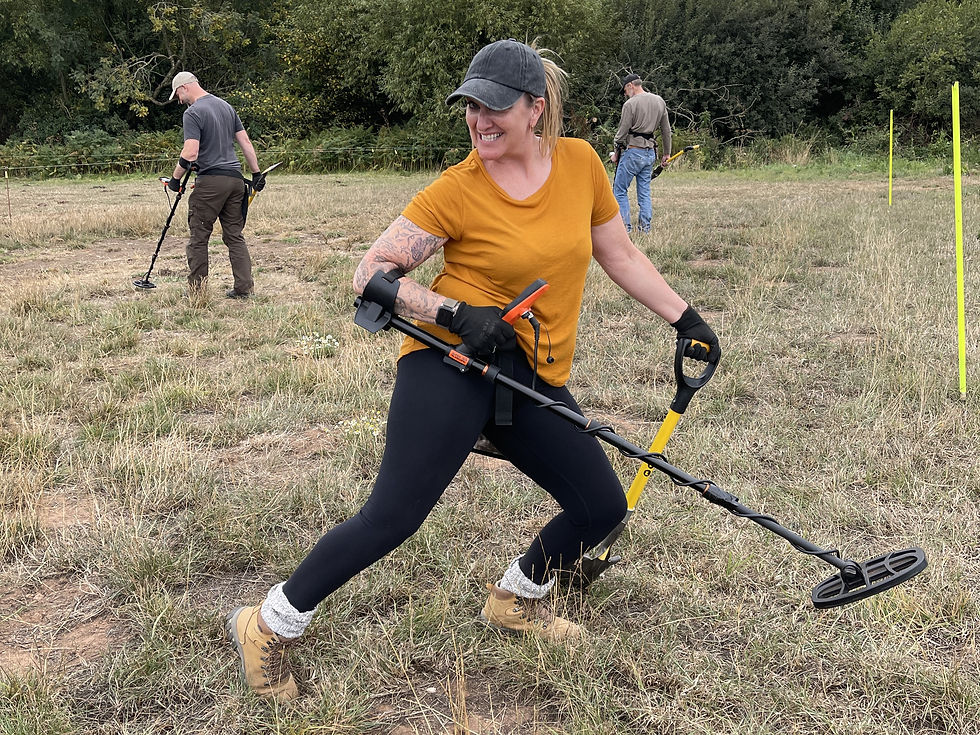
Tired of conflicting YouTube advice and pricey guesswork? Here’s the beginner-friendly way to learn metal detecting properly—before you buy a detector—plus where to book a welcoming, small-group experience day near Bristol.
Can someone actually teach me to metal detect—properly?
Yes. Learning in the field with an instructor trims months off the usual “trial-and-error” route. Instead of juggling clashing tips from forums and videos, you’ll get a simple, repeatable routine: set up the detector, sweep cleanly, identify targets, pinpoint accurately, recover neatly, and—crucially—know when not to dig. Those tiny tweaks to swing, sweep speed and coil overlap are what turn random bleeps into confident decisions.
Where can I learn to metal detect in the UK?
There are a few. One designed expressly for beginners is Gordano Valley Metal Detecting (GVMD) in North Somerset, about ten miles from Bristol. Their experience days run on real farmland above the Gordano Valley, with small groups and a patient, step-by-step approach. It feels like a one-day apprenticeship rather than a quick demo: arrive, get briefed, learn the fundamentals, then spend hours practicing with friendly guidance close by.
Do I need to buy a detector first?
No—and that’s the smartest change to the “old way.” Traditionally, newcomers spent hundreds on a detector, joined a club, tried to find a permission, then wandered around for months trying to decode noise from signal. GVMD flips that. All the kit is provided—detector, headphones, pinpointer, spade, finds bag—so you can learn, test, and ask questions before you part with serious money. If you already own a machine, bring it and learn how to dial it in on real ground.
What will I learn in a single day?
Expect a calm, hands-on crash course that moves at a beginner’s pace:
Detector basics that matter: tones, Target ID numbers, and what “good” vs “iffy” sounds like in soil.
Coil control & sweep speed: the unglamorous secret to finding more.
Pinpointing & tidy recovery: neat plugs, minimal mess, faster finds.
Decision-making: when to pass, when to dig, and how to work a field methodically.
The essentials of doing it right: permissions, UK laws, recording finds, and basic etiquette with landowners and on digs.
You won’t drown in menus. You’ll leave with a simple checklist and muscle memory, not a headache.
I’m a complete beginner—will I fit in?
Absolutely. Some clubs can feel standoffish to newcomers and, frankly, a bit male-dominated. Experience-day teaching is different: it’s warm, inclusive, and set up so beginners feel welcome and confident. Small groups and friendly instructors mean you get space to learn without being talked over. Families and mixed groups are common; curiosity is the only “entry requirement.”
Isn’t YouTube enough?
YouTube is brilliant for seeing machines and settings—but it can’t watch your swing and fix your technique. Online advice often conflicts because ground conditions differ wildly; what works on a mild beach won’t map to mineralised pasture. One day of real-world feedback sorts your posture, sweep arc and pace. After that, the videos click—you finally understand what you’re hearing and why.
What about the costs—does a day really pay off?
It does. A well-run day can save you from an expensive mis-buy and the frustration that follows. You’ll understand what features actually help (and which are just menu fluff), and you’ll be ready to join a club dig or go out on your first permission without feeling lost. Consider it an insurance policy against burning cash and enthusiasm.
What do guests say?
Google reviewers consistently highlight how welcoming and patient the tuition is, how quickly confidence grows, and how useful it is to learn with all equipment provided. The small-group format and the mix of structured teaching plus time to explore the fields come up again and again. Many call it the perfect first step before choosing a detector.
Where does it happen—and when?
GVMD runs on a 500-acre site overlooking the Gordano Valley with a base at Weston Lodge near Portishead. Sessions typically run around eight hours through the main season, with open group days, private tuition and family options available. Parking, facilities, tea/coffee—and the kit—are sorted, so you can focus on learning and enjoying the day.
How do I book—and what’s the next step?
If you want the fastest, friendliest route into the hobby, book with Gordano Valley Metal Detecting via metaldetectingexperiencedays.com. Go once, learn the craft properly, then choose your detector with confidence and step onto your first dig as a competent beginner—basically skipping the “lost months” most people endure.
The smarter way in
Spend a day with an instructor, not months in a muddle. Learn the right habits, understand the signals, and enjoy the hobby the way it’s meant to be—calm, curious, and outdoors. If that sounds like your speed, Gordano Valley Metal Detecting is a very sensible first stop.
Bibliography (sources & further reading)
UK Detectorist — “Gordano Valley Metal Detecting: A Day Out That Unearths More Than History.” Uk Detectorist
MetalDetectingExperienceDays.com — Home/Overview (location, season, equipment provided). metaldetectingexperiencedays.com
MetalDetectingExperienceDays.com — What’s Included (full kit list; tuition outline). metaldetectingexperiencedays.com
MetalDetectingExperienceDays.com — FAQ (site location, group size guidance, travel notes). metaldetectingexperiencedays.com+1
MetalDetectingExperienceDays.com — Event page (8-hour beginners’ day; Weston Lodge details). metaldetectingexperiencedays.com
Parish Business Directory (Weston-in-Gordano) — Listing shows “Gordano Valley Metal Detecting 5.0 (20 reviews), Training centre.”


